
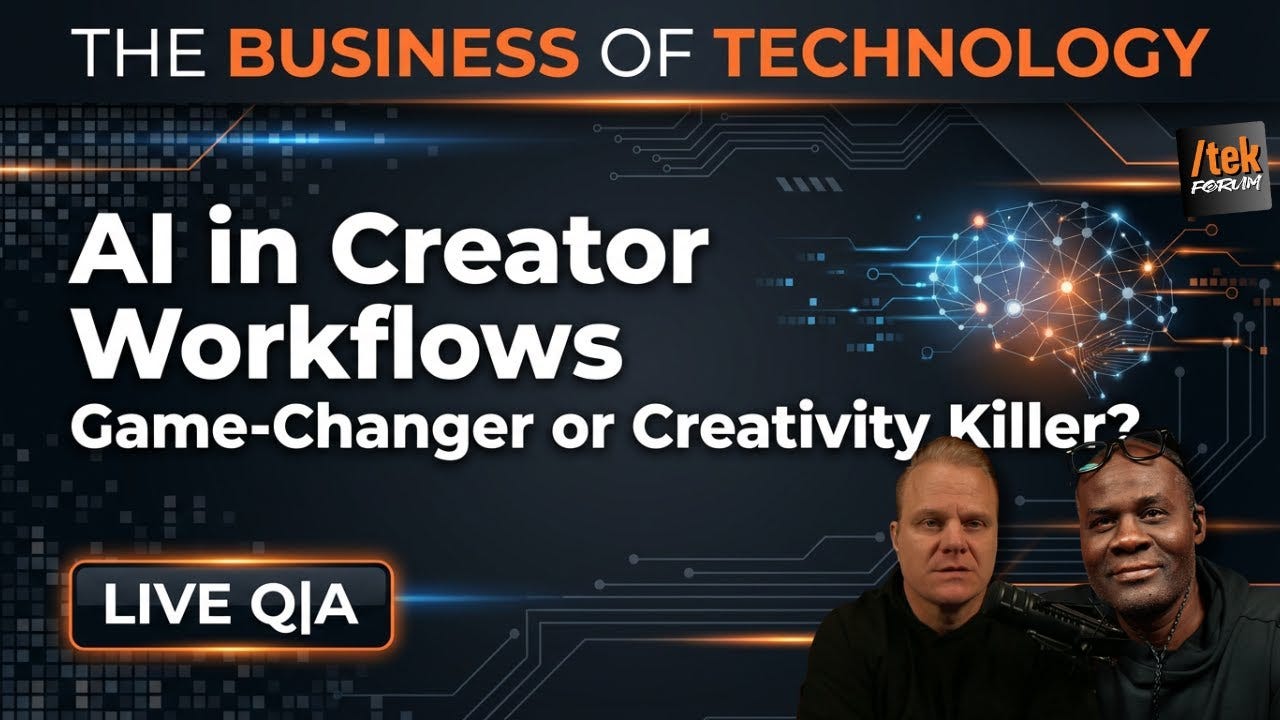
AI Killing Your Creativity? Here’s What Creators Miss
AI is not an enemy of creativity. It is a supercharger for certain tasks and a magnifier for blind spots. The real difference between getting flattened by the AI tidal wave and using it to level up comes down to two human skills: judgment and purpose. Use those and AI becomes a partner, not a shortcut that erases your voice.
Why AI is a tool, not a replacement
AI can create copy, images, and rough edits faster than we once thought possible. That speed is a gift, but it can also produce more noise. Push content out faster and you might be serving volume, not value. Ask the simple question: who benefits from this extra output, and is it actually helping them?
“What you should be doing is looking at what AI is giving you and not just turning it around and posting it and scheduling it.”
If AI frees up hours you previously spent on menial tasks, use that time for what matters: crafting fewer, stronger pieces that reflect your voice. The worst outcome is trading skill and taste for uniformness and slop.
Two indispensable creator tools: judgment and purpose
Every creator has a “utility belt” of tech. LLMs, image generators, and plugins are convenient, but they are not the most important tools you own. The two essentials are judgment and purpose.
Judgment: Decide when AI output meets your standards and when it needs human intervention.
Purpose: Be clear why you create. Purpose helps you filter AI-generated noise and focus on content that serves real people.
Watch the full session between myself and Chris Stone HERE.
Use AI to reclaim time — then invest it
A practical workflow is to let AI handle repetitive, low-value tasks: transcription, first-pass edits, audio cleanup, and structured notes. That frees time for improving craft, testing small creative tweaks, and iterating on things that truly move the needle.
Example: a 50-minute podcast that once took hours to edit can be rough-cut with AI tools in an hour. With that reclaimed time, try one deliberate improvement — a slightly different structure, a unique B-roll treatment, or a better pacing decision. Those small, repeatable gains compound.
Organize with workspaces and aggregators
If you use multiple AI models and tools, centralize them with an aggregator that supports workspaces. That prevents your prompts and assets from bleeding together and keeps each project on-brand and tidy.
Magi, Merlin, and similar platforms let you:
Save prompts per project.
Store media generated for each show or client.
Keep context so outputs stay relevant to a single brand or podcast.
When every prompt and image is wrapped in the right workspace, you avoid surprises like receiving responses shaped by unrelated personal data or previous projects.
When to put human hands on it
AI is great at drafts, but it struggles with nuance, voice, and taste. If an output “feels wrong” — too generic, awkwardly punctuated, or off-brand — take it back. Use AI to iterate quickly, but know when to stop iterating and start authoring.
“If you do that enough, you either take the time to get the prompt right, or you just end up doing it yourself.”
Typical areas to keep human-first:
Voice-sensitive copy: product messaging, longform essays, personal posts.
Creative direction: story beats, episode structure, unique series concepts.
Brand-defining visuals: thumbnails, logos, core campaign imagery.
Thumbnails: tiny canvas, huge return
Thumbnails are a classic example where AI can get you 80 percent of the way, but human taste wins clicks. Top creators sometimes spend more time on a 1280 by 720 thumbnail than on the full edit because that visual is the gateway to your work.
Process to treat thumbnails like a weapon:
Use an image model to generate strong raw concepts.
Bring them into a design tool like Firefly, Canva, or Photoshop.
Add your color, type, and composition rules so the thumbnail fits your aesthetic.
Iterate — small tweaks often raise CTR significantly.
Protect your work: ownership, watermarking, and rights
Intellectual property questions are real and evolving. If you craft something using AI, think about how much of that work carries your DNA. When an asset matters commercially, add ownership layers: clear prompts records, version history, and visible watermarks on short-form clips.
Tools and practices that help:
Watermarking for short content to make ownership visible.
Platforms that help track and file claims if someone copies your material.
Working with services that aim to tokenize usage and negotiate name and likeness rights when AI recreates performers or public figures.
“If you created something and you utilize AI, I want to make it in line. I’m trying to put my DNA in it.”
Practical habits to manage the AI tidal wave
The flood of new tools is overwhelming. Adopt routines that protect your focus and maximize learning.
Time block 30 to 60 minutes weekly to explore new tools. Treat exploration as a scheduled task, not a rabbit hole.
Subscribe selectively to one reliable channel or newsletter that curates updates you can act on.
Surround yourself with a few trusted peers who test the gear and report back. Let them burn off early friction while you keep shipping.
Segment workspaces so personal prompts do not contaminate client or brand outputs.
Monetization and audience experience
If you run live sessions, consider audience experience over automated ad revenue. Ads can interrupt moments where viewers are leaning in. A simple community survey will tell you whether to run ads during live sessions or turn them off and rely on other revenue channels.
Practical tip: turn ads off for live sessions and turn them back on after the stream. Leave product links or merch visible during the live so the audience can support directly.
Ownership or stewardship: the bigger legal picture
The law is still catching up. Questions about prompt ownership, likeness, and AI-generated works are being debated across platforms, legal teams, and legislatures. Treat AI-generated elements like any other outsourced asset: document the creative input, and register where practical.
If you rely on AI-generated likenesses of known artists, expect licensing conversations. Services and coalitions are emerging to give original creators protection and share compensation when their name or likeness is used.
One-sentence advice for overwhelmed creators
Don’t let AI distract you from serving your audience; use it to free time, apply your judgment, and focus on a small set of things you do better than anyone else.
Final checklist
Time block AI discovery and learning.
Organize prompts and media into workspaces per project.
Use AI for iterative drafting; apply human taste for final delivery.
Invest saved time into skills and small creative experiments.
Watermark, track, and document assets you care about.
AI will continue to evolve. Creators who keep their purpose clear, cultivate judgment, and treat AI as a force multiplier will win the long game.
James ✌🏾


