How Live Selling Platforms Are Creating New Income Streams for Creators
What live selling actually is
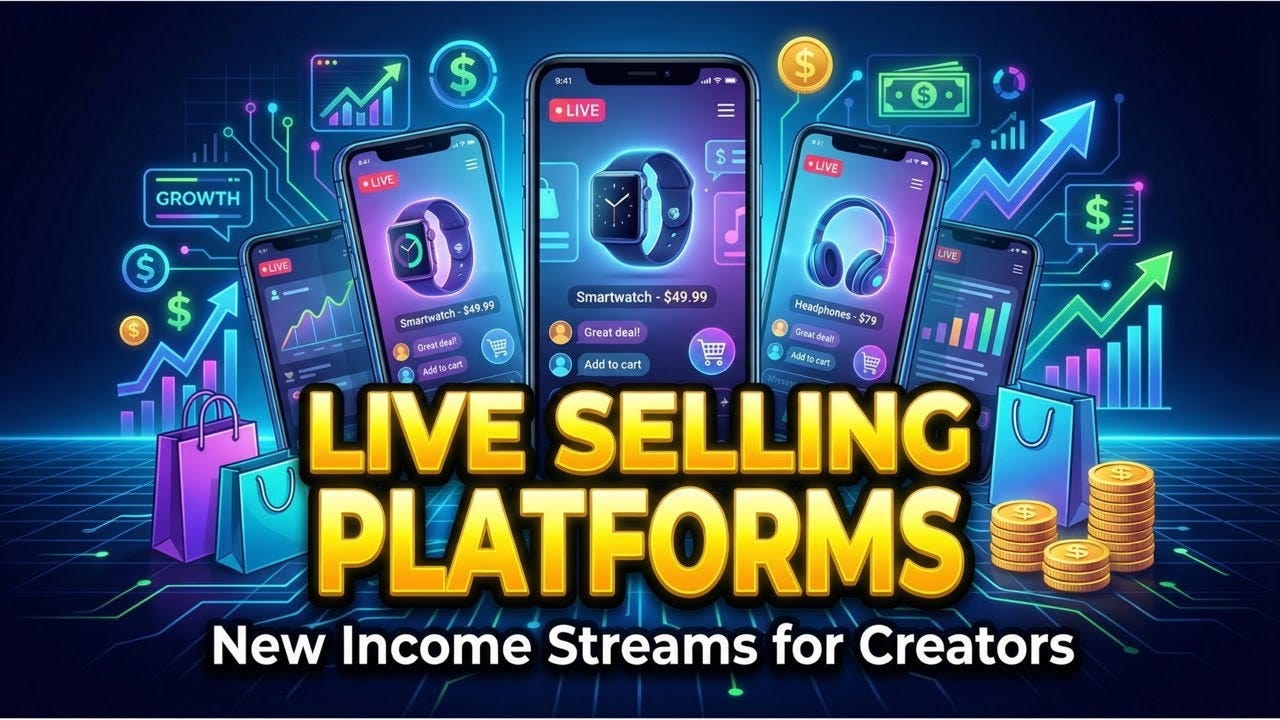
Live selling is the mashup you didn’t know you needed: part eBay auction, part Twitch show. Hosts get on a vertical stream, show products up close, and the audience bids in real time. The result is fast-paced, social commerce that rewards volume and entertainment as much as the items themselves.
Live selling, simply put, is a mix of eBay auctions and Twitch.
Why it works
Real-time interaction creates urgency and repeat engagement.
Vertical, mobile-first presentation makes shopping frictionless.
High-volume buyers treat it like a digital garage sale — they want deals.
Platforms to know
Whatnot
Whatnot is built for auction-driven, high-volume physical goods. The platform favors phone-based streams, offers built-in shipping labels, and moves product fast — often at steep discounts relative to retail.
TikTok Live
TikTok brings massive attention and higher conversion potential, but it’s a different creative challenge: short, vertical content and a need for quick, snackable demonstrations.
Amazon (Influencer + Shoppable Videos)
Amazon’s program is less auction-focused. Creators get a storefront, can publish 1–2 minute shoppable videos that appear on product pages, and often receive free product from brands in exchange for on-page content. Approval is gated by audience proof; once approved, creators keep the product and can earn affiliate-like revenue.
How the mechanics work (and the tech)
Stream setup
Most platforms are optimized for a phone-first experience. Using a phone is the simplest, most stable approach. Advanced setups using OBS or external cameras are possible, but they are more fragile and often unsupported during high platform load.
Inventory and upload
Platforms like Whatnot provide a CSV/template for bulk uploading inventory. You can either:
Create one row per item with full metadata (title, description, weight, image link) — better discoverability and higher conversions.
Create generic “miscellaneous” SKUs by weight for super-fast liquidation-style sales — easier to run but less searchable for shoppers.
Shipping handled for you
One of the biggest conveniences on Whatnot: the platform generates shipping labels. You still need to enter weight, dimensions, and hazardous details (for batteries), but the buyer address and postage are handled. A cheap thermal label printer is a small, worthwhile investment.
Auction formats explained
Different shows use different auction mechanics. The common flavors:
Reset timer (default) — 30 or 10 seconds that reset on each bid. Creates back-and-forth bidding wars.
Sudden death — fixed countdown with no resets. Fast, intense, and great for high-energy streams.
Buy it now — not an auction. Items are set at a fixed price and can be purchased directly from inventory.
Sourcing inventory — the real game
Finding product cheaply is where margins come from. Common sources:
Returned pallets and overstock from big retailers
Storage unit auctions
Thrift stores, yard sale hauls, and local liquidation outlets
Brand partnerships and the Amazon influencer model — free product in exchange for content
For creators who can get product for free or near-free, this becomes a high-profit operation. If you’re buying wholesale or liquidation, the math changes — but volume still wins.
Expected margins and where to list things
Live selling is liquidation-friendly. Expect lower-than-retail final prices:
Whatnot: a realistic target is ~20% of retail on average for auctioned items. Buy-it-now listings can be closer to 25% of retail if you price thoughtfully.
eBay / Facebook Marketplace: better for getting closer to retail (50–70% of retail possible for desirable items).
Amazon storefront: good for brand-aligned shoppable videos and affiliate revenue; often earns you product and creator fees.
Amazon shoppable videos — quick rules
If you get access to the Amazon influencer program, shoppable videos are powerful:
Length: typically 1–2 minutes.
Approval: videos are reviewed (often by AI, sometimes humans). Avoid showing barcodes, license plates, or other PII. No medical or misleading claims.
Creativity: answer why someone should buy, what problem it solves, and how it helps. Clean, well-lit shots outperform shaky clips.
Common pitfalls and things not to sell
Avoid selling anything that violates safety or health rules: used personal grooming items, hearing aids, or anything that requires a health assessment. Also, be careful with music — unlicensed tracks can create issues on some platforms.
How to start — a practical checklist
Create your account and apply for seller/influencer programs where needed.
Assemble a small starter inventory: 5–20 items or multiple quantities of a few SKUs.
Decide your stream style: demo-heavy (ShamWow-style) or rapid liquidation.
Use your phone to stream your first few shows — keep tech light.
Label and organize physical inventory (number boxes if you use generic SKUs).
Invest in a thermal label printer and basic lighting if you plan sustained selling.
Be consistent: schedule shows and invite repeat viewers to follow your channel.
Tips that actually move product
Demo sells — physically showing the benefit converts. Think old-school infomercial demos but authentic.
Personality matters — cosplay, music, and banter keep people watching and bidding.
Metadata wins — if you can give a precise title and description for each item, shoppers can discover and plan to stick around for the right product.
Play the long game — measure success across 50+ items rather than getting hung up on one low sale.
Use AI to source inventory — prompt tools to surface liquidation sources, pallet suppliers, or wholesale deals to scale inventory cheaply.
A simple SOP for listing (one practical workflow)
Bulk uploads are your friend. A repeatable flow looks like this:
Catalog items in a CRM or Notion (include who sent it, promised deliverables, and condition).
Export as CSV and map to the platform template.
Include weight, category, and a public image URL for each row.
Upload in batches of 40–70 items to avoid data errors.
Schedule a show and run items live or mark some as buy-it-now for discoverability.
First-show strategy
Keep the first show small and confident. Start with five items so you can practice pacing, chat interaction, and shipping flow. Learn what hooks your audience and refine the tempo for auction timers or sudden-death rounds.
Final takeaways
Live selling is not a replacement for every creator’s e-commerce strategy, but it is a powerful complementary channel. If you have access to product, even a little, and you enjoy demoing and bantering with an audience, this is a legitimate way to create revenue.
Core playbook
Start small, stay consistent.
Prioritize product sourcing and quick shipping.
Use a mobile-first setup unless you deliberately invest in a reliable multi-camera rig.
Measure per-batch performance, not per-item variance.
Action items you can do this weekend
Refresh or create an Amazon storefront and update a few shoppable videos (1–2 minutes each).
List 5–20 items on a live selling platform using the mobile path.
Buy a thermal label printer if you intend to ship regularly.
Schedule your first live show and promote it a few times before going live.
Live selling is growing fast. The tech and playbooks are straightforward. The variable that predicts success is consistency plus product. If you start small and iterate, you can build another income arm for your creator business that turns clutter, demos, and brand deals into real cashflow.
Want an example inventory and workflow?
Follow a structured approach: catalog in Notion, export CSV to the platform template, and run recurring evening streams to move liquidation-style piles or curated find collections.
Happy selling y’all
✌🏾