
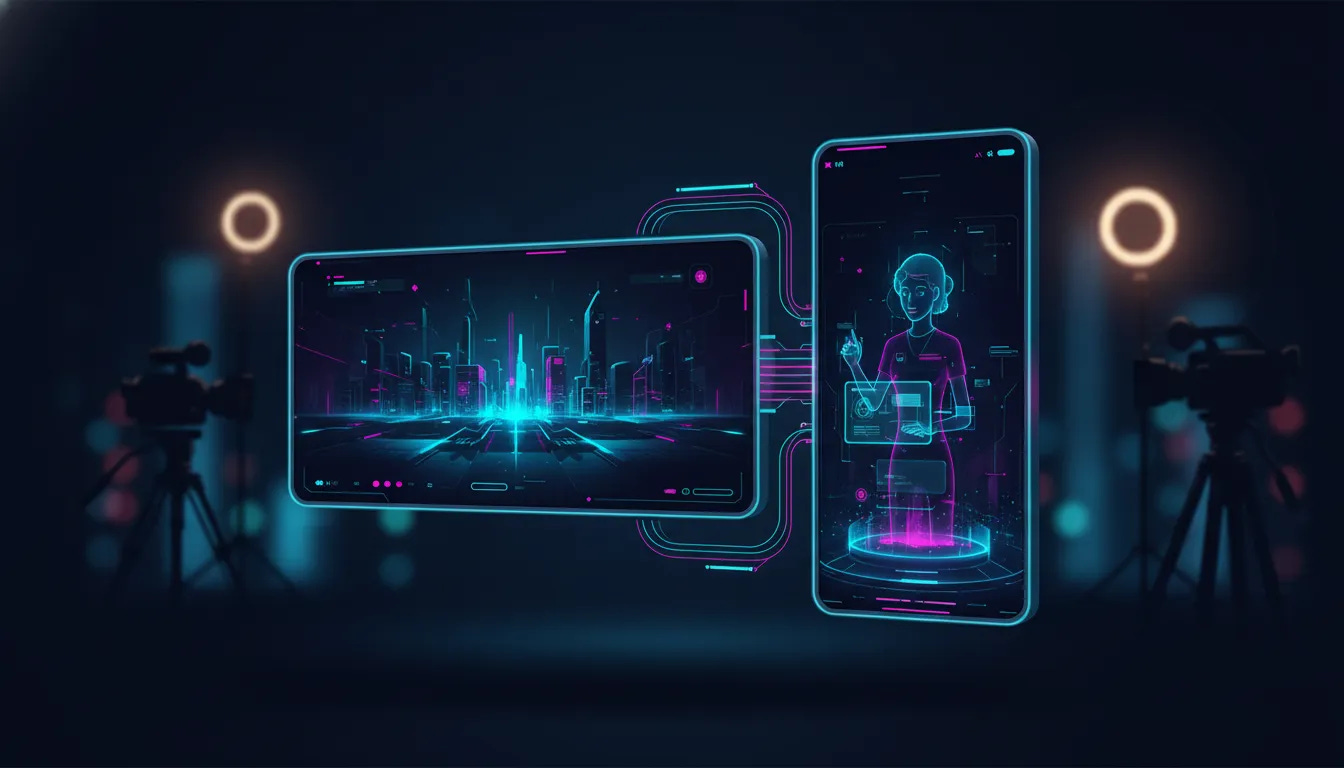
Wide + Tall: The New Livestream Advantage
Creators have been told for years to pick a lane. Wide or tall. Long form or short form. “Build once, distribute everywhere” or “go all in on one platform.”
But the lane is shrinking. The new advantage is simple: you can now show up in horizontal and vertical at the same time with one production.
This changes distribution, workflow, engagement, and even how you think about monetization. The real question is not whether you can do it. It is whether you are using it strategically, so it looks premium and performs like it should.
The real question: is dual-aspect streaming a gimmick or a real advantage?
Capability is not the same thing as strategy. One of the strongest themes from the conversation was this challenge: just because you can stream both directions does not mean you should turn every switch on immediately.
Instead, ask three things:
Does it match your niche and audience?
Do the platforms you care about reward vertical discovery?
Can you keep the production quality consistent in both formats?
The people who got it working were not chasing novelty. They were already distributing short clips. They were already repackaging. Dual-aspect just removed extra steps.
Horizontal vs vertical: what actually changes for creators
In practice, wide (horizontal) is still the “full screen, big monitor, less UI clutter” experience. Multiple guests described it that way: bigger screen visibility, less distraction, fewer overlays fighting for attention.
Vertical is different. It is a square. It is a feed-native format. It is also where many platforms push attention hardest.
Why vertical can win for discovery
Vertical often functions like the front door. Even when someone is not a follower yet, the content still shows up in Shorts and Reels style feeds. If it captures them, they click through and become part of your community.
That is why several creators talked about vertical-first framing. They are building for the smaller real estate and designing hooks and attention triggers that can survive the cut-down experience.
Why horizontal still matters for depth
Horizontal is where you deliver the full show. The live experience feels more “room-like.” It supports longer attention and is ideal for hosts who want the layout to feel cinematic or consistent.
Most creators in the conversation were not trying to abandon horizontal. They were trying to stop treating vertical as a separate job.
One production, multiple algorithms: distribution advantage
The biggest business reason to go wide and tall together is distribution. You are not just posting to more places. You are showing up in more surfaces that each have their own behavior.
That means:
Your vertical feed performance can improve because the algorithm that favors tall content gets what it expects.
Your horizontal long-form performance can stay strong because you are not sacrificing the “main show” experience.
Your audience growth pipeline becomes clearer because people can discover you through vertical and then return for the horizontal.
One creator even described seeing subscriptions come in from vertical. The takeaway was direct: vertical is not just a “nice-to-have.” It is a capture mechanism.
Workflow reality: how dual-aspect saves time (and reduces friction)
Dual-aspect is not just about output. It is about eliminating workflow steps.
Several guests emphasized time savings. Instead of recording one direction, then cutting, editing, and exporting, dual-aspect can generate the separate formats without the “sawing off your horizontal” problem that some native approaches create.
The important quality difference
A major complaint was this: dual streaming methods that simply crop or split the same feed can feel like you “lost” your horizontal experience.
The solution discussed was separate layouts per aspect ratio. In other words, vertical should not just be horizontal shrink-wrapped into a square. It should use the real estate properly.
That is why the conversation kept coming back to the same phrase: take advantage of the real estate.
Designing a show that looks right in both formats
This is where creators either level up or look sloppy.
One of the strongest pieces of advice was to create a vertical-safe production, meaning you design the visuals for the square first so nothing important gets covered or cropped weirdly.
Examples mentioned included:
Different overlays for vertical versus horizontal
Hiding distracting elements on vertical (like comment overlays that interrupt the subject matter)
Using layouts that match each platform’s viewing behavior
Another key point was about pacing and attention. If you are going to cut content into clips later, then you should seed attention grabbers inside the live moments so the clipped version hits harder.
Engagement: managing chat without splitting your community
Dual-aspect does not automatically mean dual communities. Several creators talked about staying consistent with delivery and engagement style even as more people join through different orientation feeds.
A practical concern was that vertical platforms love chat overlays. The solution was not to ignore engagement. The solution was to design how engagement shows on screen so it does not wreck the viewing experience.
One creator also noted a sneaky effect: sometimes ad frequency behaves differently across orientation. That is not an aspect ratio “bug,” it is platform behavior, but it does influence how people perceive your content experience.
Monetization: what dual-aspect enables
Once you have one show feeding two orientations, monetization becomes less about “can I monetize?” and more about “what deliverables can I package?”
Even when the conversation did not list a single specific monetization strategy step-by-step, the business angle was clear:
More surfaces means more potential sponsor value.
More clip-ready content means easier sponsorship deliverables.
A clearer funnel emerges when discovery happens in vertical and depth happens in horizontal.
And because vertical-native formats often perform well in short feed surfaces, sponsors can get both “brand visibility” and “audience capture” opportunities.
Which platforms to use: be flexible, but choose tools intentionally
A recurring theme was expansion without chaos. Creators were adding platforms one at a time, testing quirks, then keeping what works.
Some were dual streaming on YouTube and experimenting with Instagram and LinkedIn. Others were focused on getting content into Shorts and other clip ecosystems while still maintaining a “real show” home base.
The tone was consistent: if your goal is reach, you have to meet people where they are. If you do not adjust, another creator behind you will.
Production stack comparisons: eCami-style control vs web-based studios
The conversation included a technical-but-practical comparison across tool categories.
Web-based studios
These are great for speed and simplicity. But the guests argued that web-based systems have limits in creative customization and flexibility.
Desktop software and deeper customization
The core argument for a more “real software” approach was control. One creator described it like brand identity through production.
If your show has multiple segments, distinct looks, multiple lower thirds, and a specific aesthetic, then a tool that allows deeper customization helps your content look like it belongs to you, not like a generic template.
Recording vs streaming: a pro tip for making dual-aspect usable everywhere
One of the most useful workflow discoveries was treating dual-aspect not only as a livestream feature, but also as a recording strategy.
The idea: record and walk away with files immediately. No waiting through render workflows. Then distribute the separate files where they fit best.
Dual-aspect recording matters because it supports:
Posting vertical versions to short feed surfaces
Posting horizontal versions as long-form or “full show” episodes
Using the same assets for marketing teasers without rebuilding everything from scratch
Infrastructure matters (more than people think)
If you are generating bigger files, you need storage that can handle them. The conversation warned against “tiny flash drive” setups and encouraged planning for fast drives and enough capacity to avoid slowdowns and contention.
Routing viewers between vertical and horizontal with less friction
Here is a pro tip that directly addresses a real problem: when two separate streams are happening, a viewer can accidentally end up in the orientation they do not prefer.
A solution was to:
Use the vertical play page URL inside the horizontal video description (and vice versa)
Add orientation clues in the title (such as including “vertical” in the vertical title)
Include hyperlinks so viewers can switch with one click
The goal is to avoid asking people to do “a five-step button list.” Nobody has time for that. Give them one-click routing.
Routing strategy: vertical-first does not mean ignoring horizontal
Several creators described a vertical-first build mindset. Why? Because vertical content is often what brings new people into the room.
But the key nuance was that this is still “optimize for both equally,” not “abandon one.”
One creator put it like this:
Build vertical with strong hooks and proper framing
Keep horizontal as the “main show” experience
Use each orientation for what it does best
Up next: the new mobile dual-record reality
The conversation also pointed toward mobile tools making dual recording easier. One mobile app mentioned was described as recording both horizontal and vertical at the same time on a phone, delivering isolated files.
The practical impact was workflow elimination. If you can capture both versions instantly on mobile, you can share and distribute without heavy post-processing.
Even if you do not use the specific app, the principle matters: the market is moving toward “one capture, multiple delivery formats.”
Cloud encoders and security: be cautious and use trusted providers
A question came up about running software encoders on cloud infrastructure like AWS, GCP, or Azure. The tone was “cautiously optimistic” but not paranoid.
The response emphasized two ideas:
Using major cloud providers with known security practices is generally reasonable.
Be skeptical of unknown services that ask for credentials and payment details, especially from stealth or unclear sources.
The advice was not to fear innovation. It was to pick trustworthy systems when you are just trying to get started or keep your production stable.
Zoom integration: a big step for larger productions
The conversation highlighted another capability: Zoom integration within a streaming platform workflow.
This matters for anyone who wants webinars, mastermind-style sessions, or larger guest panels without rebuilding their whole stack.
The described benefit was a “best of both worlds” approach: run the meeting environment while still streaming it out to your audience and capturing recordings inside the same ecosystem.
Predictions and next steps: what to do tomorrow
The final challenge was direct. Dual-aspect is not an experiment you keep in the back of your mind. It becomes valuable when you build a plan for the audience it brings in.
Here is what creators said they would do starting immediately:
Expand destinations by adding one new platform at a time.
Adopt vertical-first framing so the discovery content looks intentionally designed.
Use what works from your analytics because the numbers are telling you where attention comes from.
Keep the same energy and delivery style while managing orientation-specific layout and overlays.
In other words: keep your show the same. Upgrade your distribution and production so you can show up wide and tall without losing quality.
Closing mindset: wide + tall is the new normal
The takeaway from the conversation was summed up with a straightforward mindset shift: build for the format that is winning discovery right now. That does not kill long-form. It supports it.
Audio is still valuable. Horizontal is still valuable. But the world is becoming increasingly vertical in how it captures attention and feeds short discovery moments.
If you want a practical starting point: stop thinking of dual-aspect as a gimmick feature. Treat it like a distribution advantage you design for, so your show looks premium everywhere it appears.


